
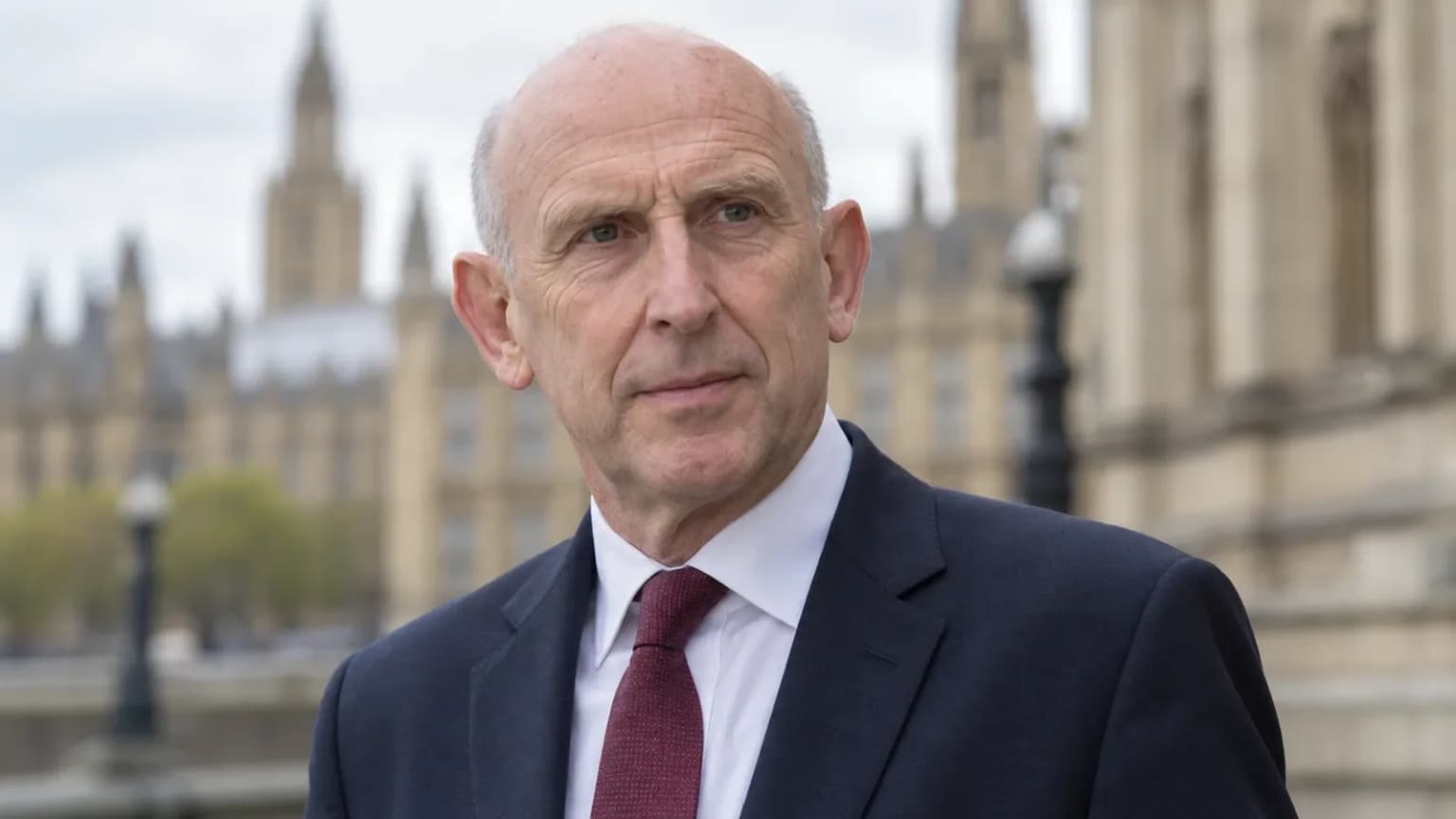
Healey £35bn Budget challenge: Britain faces a difficult choice between finding more money for public services and defense, changing its spending commitments, or accepting tighter budgets. The Institute for Fiscal Studies estimates that protecting departmental budgets while accommodating higher defense spending could require around £35 billion in tax increases or benefit cuts.
The warning comes before John Healey’s first Budget as chancellor, scheduled for October 28, 2026. It describes a possible funding requirement, not a tax package that has already been approved.
Understanding the estimate means separating three questions: what existing budgets can buy, how much additional commitments cost, and how ministers would finance them.
What the think tank is warning about
The Healey £35bn Budget challenge is broader than military spending. It concerns whether the government’s overall spending plans can support its public service priorities alongside its defense ambitions.
The IFS estimates that avoiding departmental cuts on existing health and defense paths could require around £25 billion in additional spending in the financial year 2030–31. Allowing for higher defense spending takes the broader requirement to approximately £35 billion.
These are alternative scenarios, not amounts that should be added together. The larger figure incorporates the broader combination of pressures.
The date matters too. This is an estimate of additional annual spending in 2030–31 relative to existing plans. It is not a demand for the entire amount immediately, and it is not a total accumulated over several years.
Why John Healey is responsible for the decision
The Healey £35bn Budget challenge falls to Healey in his role as chancellor of the Exchequer, Britain’s chief finance minister. According to his official government biography, he took that position on July 20, 2026, after previously serving as defense secretary. www.gov.uk
The chancellor oversees tax policy, borrowing, and the government’s overall spending framework. That makes the Budget the point at which competing promises must be brought together in a financial plan.
For readers familiar with Healey’s defense background, this distinction helps explain the headline. He is deciding how to balance the government’s finances, including the resources available to the military and other departments.
How inflation changes the spending calculation
Inflation helps explain the Healey £35bn Budget challenge. A budget is an amount of money; a public service needs staff, buildings, equipment, energy, and supplies.
When those inputs become more expensive, the same allocation supports less activity unless productivity improves or the service changes how it operates.
An increase in cash funding can therefore coexist with a reduction in purchasing power. Economists call that a real-terms cut.
The Office for Budget Responsibility explains that inflation also influences tax revenues, benefit payments, and debt interest. Its effect on the public finances cannot be measured simply by looking at one department’s costs.
What a funding squeeze looks like
Consider a hypothetical agency receiving £200 million a year. If the cost of maintaining its operations rises by 5%, it needs £210 million to provide the same activities.
An increase to £204 million would look like a £4 million funding boost. However, the agency would remain £6 million below the amount needed to cover its higher costs.
This hypothetical example illustrates one mechanism behind the Healey £35bn Budget challenge. It is not an estimate for any actual agency.
Whether the gap produces fewer services depends on what efficiencies are possible, what demand looks like, and whether additional funding arrives.
Why defense promises need a timetable
The Healey £35bn Budget challenge also raises a practical question about UK military spending plans: when will the money become available?
A long-term commitment is easier to assess when it includes annual allocations. Without that timetable, readers cannot easily tell whether funding arrives before equipment orders, staffing decisions, or other commitments require it.
Targets expressed as a percentage of gross domestic product need interpretation. GDP measures the economy’s output, so the cash amount associated with a percentage depends on the size of the economy.
The useful comparison is therefore between the stated ambition, the annual money allocated, and the activities that funding is expected to support. The full £35 billion estimate should not be described as a defense-only shortfall.
What options are available in the Budget?
The Healey £35bn Budget challenge does not determine one inevitable policy response. Ministers can choose a combination of measures, with different consequences for households and services.
Additional tax revenue
Higher revenue could support additional spending. However, the details determine who contributes and when the money becomes available.
A measure that produces receipts later in the forecast does not automatically cover an earlier spending commitment. Recurring annual costs also need a sustainable source of financing.
Lower spending elsewhere
The government could change priorities, reduce commitments, or redirect money between programs. Those decisions should explain which activities will receive less funding and what that means for delivery.
Efficiency savings require similar scrutiny. A convincing proposal identifies the operational change, the cost of introducing it, and when savings should appear.
More borrowing
Borrowing provides funding now while creating future obligations. Its affordability depends partly on financing costs and economic conditions.
Healey has said his Budget will be based on fiscal discipline and meet the government’s fiscal rules. Any borrowing decision therefore needs to be assessed alongside those commitments.
Why meeting a fiscal rule is not the whole answer
Another aspect of the Healey £35bn Budget challenge is the difference between fiscal headroom and realistic spending plans.
Headroom means the forecast margin by which the government meets a fiscal target. It is not a separate pot of cash. obr.uk
Imagine a hypothetical forecast that meets its target only because future departmental spending is tightly restricted. If those limits cannot support the services ministers promise, the underlying conflict remains unresolved.
Readers should therefore examine both the forecast arithmetic and the explanation of how departments will operate within their allocations.
What households should watch next
The Healey £35bn Budget challenge does not tell an individual household how much more tax it will pay or whether a particular benefit will change.
Those outcomes depend on the policies announced, eligibility rules, and implementation dates. Treat the headline amount as an estimate of a broader policy problem, rather than a personal financial forecast.
For American readers, the story illustrates the choices involved in financing security ambitions alongside domestic services. A spending commitment becomes easier to evaluate when its funding source and delivery timetable are visible.
Daily US Wire’s guide to how interest rates affect small businesses provides a related explanation of how financing costs can constrain other spending.