
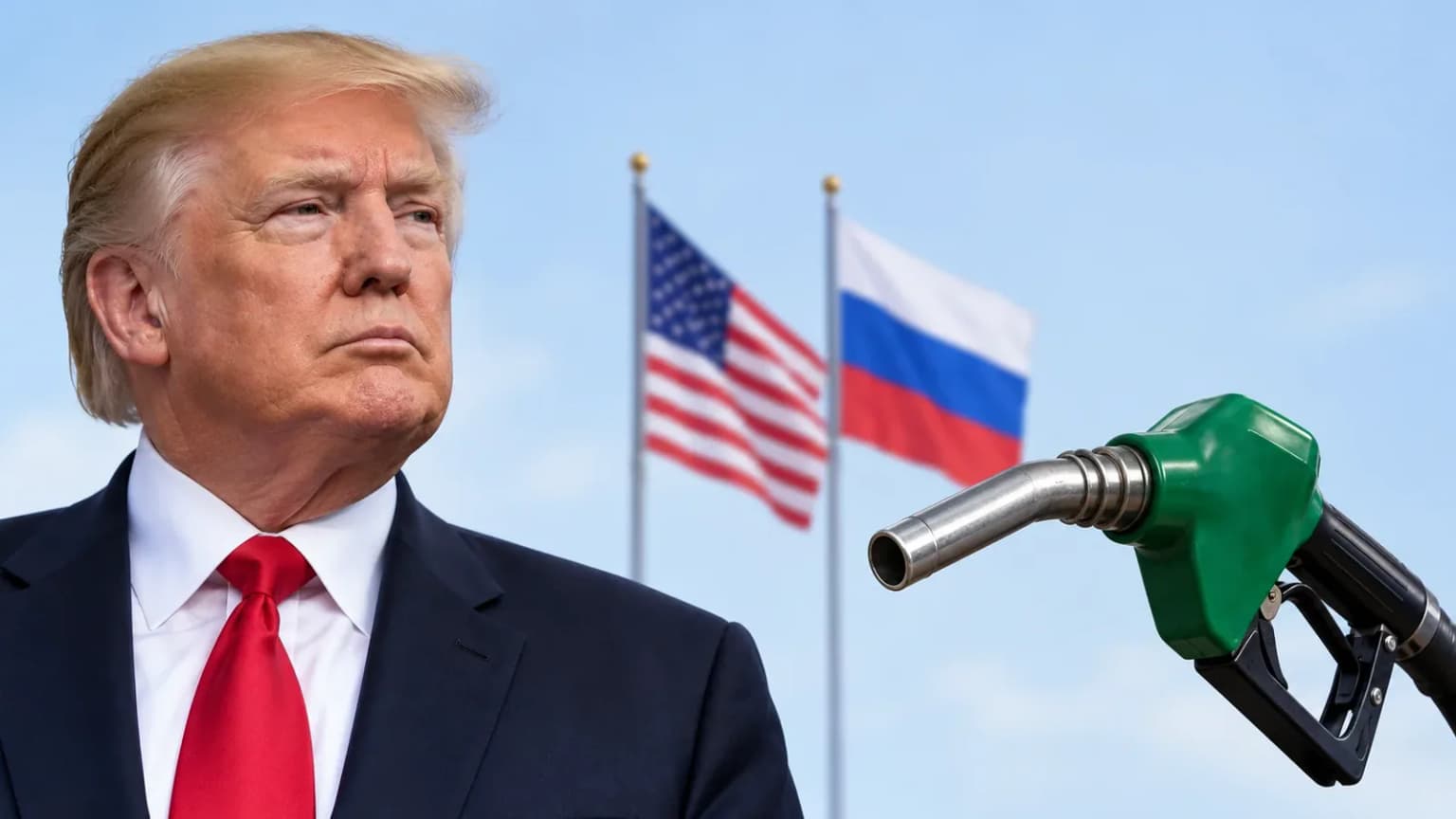
For Americans facing expensive fill-ups and rising delivery costs, the Trump Russia deal to lower fuel prices raises a practical question: will it actually make fuel cheaper?
The immediate answer is that additional diesel could ease supply pressure, but the announcement does not establish how much consumers will save. It also does not guarantee cheaper gasoline. On October 9, 2026, President Donald Trump announced Russian diesel supplies for American and global markets. Treasury separately authorized specified transactions involving Russian diesel.
The distinction matters. A supply commitment, permission to trade, and a lower price at your neighborhood station are three different developments.
What Trump announced and what is confirmed
Trump said Russia would supply more than 300,000 metric tons of diesel initially, another 500,000 tons in November, and a further 1 million tons afterward. These are announced commitments rather than verified completed deliveries.
The clearest official action behind the Trump Russia deal to lower fuel prices is Treasury’s General License 135. Dated October 9, it authorizes transactions related to Russian-origin diesel sales, delivery, offloading, and importation, including into the United States, through 12:01 a.m. Eastern daylight time on April 7, 2027.
The license contains an exception concerning debits to accounts held at US financial institutions by specified Russian state entities. It is a diesel authorization, not a blanket removal of every Russia-related sanction.
For readers evaluating the Trump Russia deal to lower fuel prices, this legal document establishes what Washington has permitted. It does not establish cargo arrival dates, purchase prices, or eventual retail discounts.
Why diesel is the focus
Diesel powers much of the machinery and transportation that keeps goods moving. Its importance extends beyond drivers who buy it directly: a fuel-cost increase can affect the businesses producing and delivering everyday purchases.
The administration had already acted before announcing the Russia arrangement. An October 5 executive order directed Treasury to consider deferring certain diesel tax payments and to provide specified penalty relief involving dyed diesel used on highways during a temporary period.
That earlier action helps explain the pressure surrounding the Trump Russia deal to lower fuel prices. Washington was pursuing multiple forms of relief within the same week.
However, tax deferral and tax forgiveness are different. The order separately directs Treasury to explore ways to eliminate deferred liabilities; it does not itself promise that all affected taxes disappear.
Would Russian diesel lower US gasoline prices?
Diesel and gasoline are distinct products. Increasing the availability of one does not automatically create an equivalent increase in the other.
The US Energy Information Administration explains that gasoline prices reflect crude oil, refining, taxes, distribution, and marketing. Local retail conditions also influence what drivers pay. U.S. Energy Information Administration (EIA)
Consequently, the Trump Russia deal to lower fuel prices should not be read as a guaranteed gasoline discount. A broader easing of energy-market pressure could help, but gasoline has its own supply conditions.
UK readers should make the same product distinction when reading American headlines: “gas” generally means gasoline, or petrol, in this context. A US diesel announcement does not establish a specific reduction at British filling stations.
Avoid treating every Russia oil deal headline as interchangeable. Crude oil must be refined, while this announcement centers on an already refined fuel.
The key test: additional supply or redirected cargoes?
The most useful question about the Trump Russia deal to lower fuel prices is whether it adds diesel to the market or mainly changes where existing supplies go.
Consider a hypothetical example. A supplier normally ships a cargo to Buyer A. After a policy change, it sends that same cargo to Buyer B instead. Buyer B gains access, but Buyer A must find replacement fuel. Total supply has not increased.
Now imagine the policy allows an otherwise unsold cargo to reach buyers, or supports genuinely higher refinery output. That could increase available supply and ease shortages.
These examples explain why headline shipment volumes alone cannot settle the Russia deal impact on gas prices. Buyers need to know what would have happened to those supplies without the agreement.
The EIA also notes that international demand, inventories, and transportation constraints affect diesel prices. Even available fuel may provide uneven relief if it cannot reach the places that need it. U.S. Energy Information Administration (EIA)
Why a market reaction is not a pump-price forecast
Financial markets can react to expectations before ships unload. Retail prices reflect fuel purchased and delivered through a physical distribution system.
That is why evaluating the Trump Russia deal to lower fuel prices requires separating three stages:
- Announcement: traders assess whether future availability may improve.
- Delivery: cargoes arrive and become usable supply.
- Retail effect: local buyers see whether their actual purchase costs decline.
None of these stages proves the next one will produce a particular saving.
A further complication is attribution. If diesel becomes cheaper while crude prices fall or refinery operations improve, the Russia arrangement may be only one contributing factor. If another disruption occurs, prices could rise despite additional deliveries.
A credible assessment should compare several indicators rather than assign every price movement to one presidential announcement.
The foreign-policy tradeoff
The Trump Russia deal to lower fuel prices also raises a question beyond household budgets: what does easing diesel restrictions mean for pressure on Moscow?
In an October 9 statement, Senators Jeanne Shaheen, Chuck Schumer, and Elizabeth Warren condemned the decision. They argued that permitting Russian diesel sales undermined efforts to restrict revenues supporting Russia’s war against Ukraine. foreign.senate.gov
That is their political assessment, not an independently established measurement of the agreement’s consequences.
The underlying policy tension is clear: measures intended to improve fuel availability can also expand opportunities for Russian sellers. Assessing that tradeoff requires evidence about both consumer benefits and the resulting transactions.
It would be premature to describe the agreement as either a proven affordability success or a settled strategic outcome.
How consumers and businesses can judge the results
Rather than budget around a promised discount, use the Trump Russia deal to lower fuel prices as a reason to monitor actual costs.
For households, compare the same fuel grade at the same nearby stations over time. A national headline is less useful than the price you can actually pay.
For a diesel-dependent business, track delivered fuel quotes, contract terms, and applicable freight surcharges. Changes in wholesale expectations do not automatically rewrite an existing contract.
A hypothetical calculation shows what measurable relief would mean: a business purchasing 1,000 gallons each month would save $200 if its actual price fell by 20 cents per gallon. That is an illustration, not a forecast.
The next meaningful update on the Trump Russia deal to lower fuel prices should establish whether cargoes were delivered, whether supply increased, and whether buyers paid less. Until then, plan around observed prices and treat announced savings as possibilities.