Nike’s problem is that being famous no longer makes it the automatic choice. For anyone asking why Nike is struggling, the evidence points to a combination of tired product cycles, an unbalanced sales strategy, stronger competitors, and the difficult work of restoring full-price demand.
The company still has enormous reach. But recognition and customer preference are different things. Its recovery depends on giving shoppers a compelling reason to choose Nike again, whether they are buying running shoes, basketball gear, or everyday sneakers.
The latest numbers show an unfinished turnaround
Nike’s October 1, 2026, earnings release reported revenue of $11.2 billion for the quarter ended August 31, down 4% from a year earlier. Nike Direct revenue fell 8%, including a 13% decline in digital sales. North American growth partly offset weakness in Greater China and Europe, the Middle East, and Africa. Source: Nike’s quarterly results.
That helps explain why Nike is struggling despite signs of improvement: progress in some markets and products has not spread across the business.
For fiscal 2026, which ended May 31, revenue was $46.4 billion, flat in reported dollars but down 2% excluding currency movements. Wholesale revenue rose 6%, while Nike Direct fell 6%. Currency-neutral figures remove exchange-rate changes to make underlying performance easier to compare. The split shows why Nike is struggling to turn a broader retail reset into consistent growth. Source: Nike’s annual results.
Familiar sneakers became a difficult habit to break
A popular shoe can generate years of sales. The danger comes when a company depends too heavily on familiar designs while customers develop new preferences.
Nike acknowledged this problem in its June 2024 earnings call, describing weaker digital traffic, more promotions, and lower sales of certain classic footwear franchises. Management planned to reduce supply to make room for newer products. Source: Nike’s fiscal 2024 earnings transcript.
By June 2025, Nike specifically identified Air Force 1, Dunk, and Air Jordan 1 as franchises it was working to resize. Source: Nike’s fiscal 2025 earnings transcript.
This product transition is central to why Nike is struggling. Cutting supply may protect a shoe’s long-term appeal, but it also removes sales before replacement products necessarily generate enough revenue.
The lesson is not that classic sneakers have no future. It is that even successful designs need careful distribution, fresh storytelling, and a balanced supporting lineup.
Selling directly did not eliminate retail realities
The Nike direct-to-consumer strategy has an understandable appeal: selling through company stores and websites gives Nike more control over presentation, pricing, and customer relationships.
However, direct selling also means handling customer acquisition, delivery, returns, and the pressure to clear unsold merchandise. Keeping the retail sale does not automatically mean keeping more profit.
Nike’s own account of Elliott Hill’s leadership describes renewed outreach to wholesale partners and identifies those retailers as important sources of product feedback. Source: Nike’s interview with Hill.
Distribution helps explain why Nike is struggling because customers do not all shop the same way. Someone comparing several running shoes may prefer a specialist store where they can try different brands.
The strategic question is therefore where Nike can best serve each shopper. An app, a flagship store, and a neighborhood retailer perform different jobs. A healthy business needs those channels to support one another.
Discounts can weaken the next sale
Promotions are another piece of why Nike is struggling. When customers repeatedly see markdowns, waiting can become the sensible buying decision.
Consider a hypothetical shopper choosing a $120 sneaker. If that shopper expects it to cost $90 next month, the full-price purchase becomes harder to justify. The discount may generate today’s order while making tomorrow’s regular price less convincing.
Nike’s 2025 turnaround discussion connected a less promotional marketplace with rebuilding wholesale confidence and restoring its digital business as a premium destination. Source: Nike’s turnaround discussion.
This helps explain why Nike is struggling to rebuild pricing power: in my assessment, reducing discounts can initially hurt sales, but continuing them can make the recovery harder.
Adidas and New Balance make the problem harder
Competition provides another answer to why Nike is struggling: shoppers have attractive alternatives, and rival companies are growing.
Adidas reported 14% currency-neutral revenue growth in the second quarter of 2026. The detail matters: apparel grew 35%, while footwear increased just 1%. Its overall growth should not be mistaken for an equivalent surge in sneaker sales. Source: Adidas’ second-quarter results.
New Balance reported $9.2 billion in 2025 revenue, up 19%, according to the company and CEO Joe Preston’s public update. Source: New Balance’s results update.
These figures illustrate competitive momentum, but they do not establish precisely how much market share Nike lost. The reporting periods, product mixes, and business sizes differ.
Claims about Nike losing market share need a defined market: US running footwear, global athletic apparel, or another category. Competitor growth alone cannot measure the transfer of customers from one brand to another.
Innovation must solve a recognizable problem
Explaining why Nike is struggling does not require claiming that Nike stopped innovating.
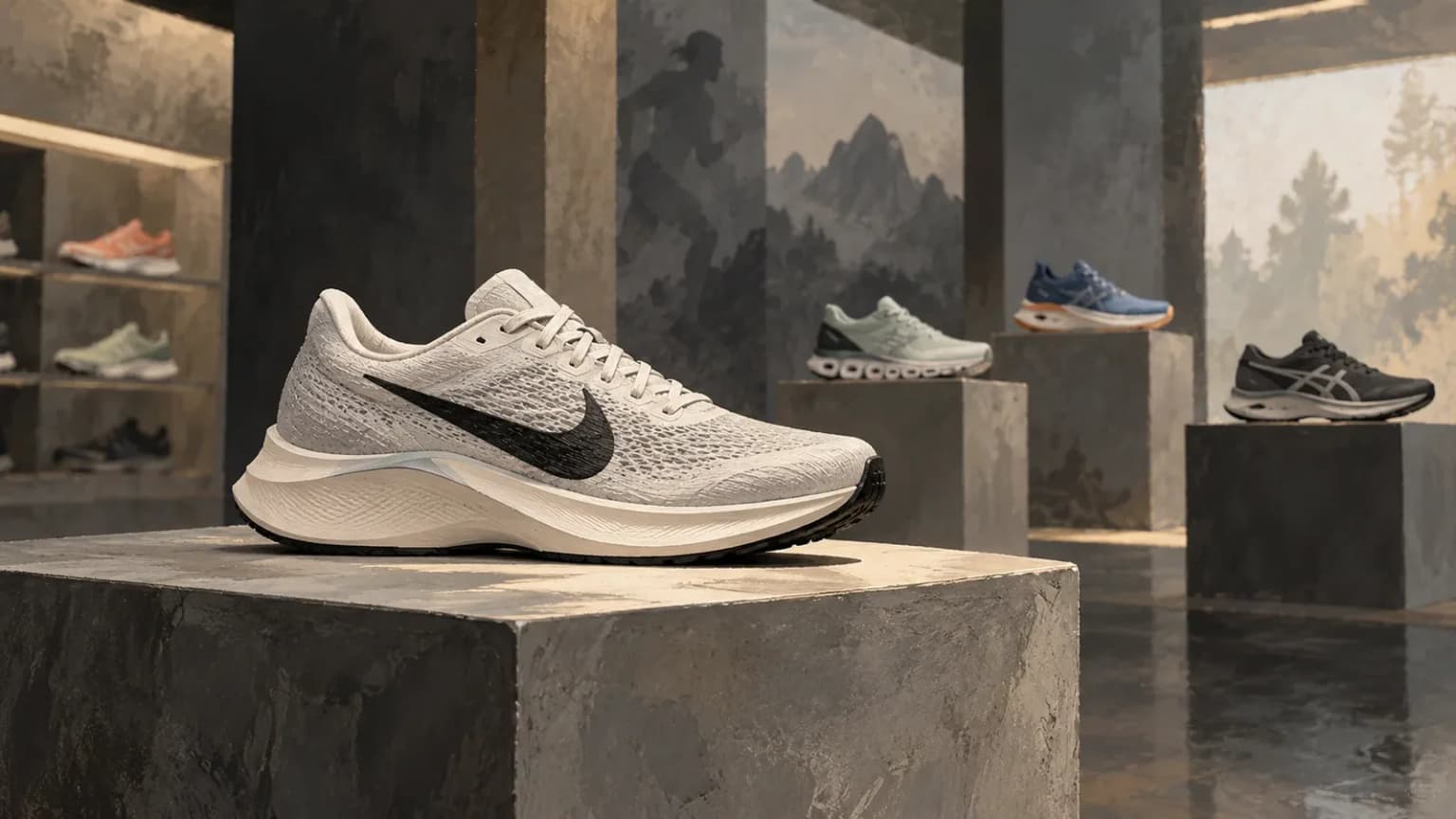
In February 2026, it introduced the Pegasus 42 with a curved, full-length Air Zoom unit. Nike also described a simplified running lineup: Pegasus for responsive cushioning, Vomero for maximum cushioning, and Structure for supportive cushioning. These are the company’s product descriptions, not independent performance ratings. Source: Nike’s Pegasus announcement.
The commercial test is whether shoppers understand the difference and find it valuable.
Nike product innovation needs to translate into a clear purchase decision: Which shoe suits my run, my comfort preferences, and my budget? Technical language earns little if the customer leaves confused.
The marketing reset has to reach the shelf
The gap between attention and purchase also helps explain why Nike is struggling. A memorable campaign can attract interest; the available product still has to justify the price.
Hill’s Nike turnaround strategy includes organizing teams around individual sports, with the stated goal of using athlete insights to improve products and storytelling. Source: Nike’s strategy explanation.
That approach gives the Nike marketing strategy a practical test: does the message connect a specific product to a specific need?
For a related perspective on building a distinctive fashion business, read Daily US Wire’s coverage of Christopher John Rogers and independent US fashion.
How to judge whether the recovery is real
Understanding why Nike is struggling is easier when recovery is measured through customer behavior. This checklist offers a way to assess future updates without relying on a single headline.
| What to watch | Stronger evidence of recovery | What could mislead |
|---|---|---|
| Full-price demand | Products sell with fewer markdowns | Revenue boosted by clearance |
| New products | Several launches produce repeat demand | One heavily promoted release |
| Retail partnerships | Retailers reorder after shoppers buy | Initial shipments filling shelves |
| Regional performance | Improvement spreads across markets | One region masking weakness |
| Profitability | Better margins supported by normal operations | A large accounting benefit |
That final distinction matters. Nike’s fiscal 2026 fourth-quarter gross margin included an approximately nine-percentage-point benefit from expected tariff recoveries. Readers should separate that effect from improvements in ordinary selling conditions. Source: Nike’s annual results.
What comes next for Nike?
The latest outlook reinforces why Nike is struggling: on October 1, management forecast a high-single-digit revenue decline for fiscal 2027 and identified further work in Sportswear, Jordan Brand, and Greater China. That is a forecast, not a completed result. Source: Nike’s latest outlook.
Nike brand recovery will become more convincing when customers repeatedly choose its newer products at sustainable prices. At the next earnings update, look for that combination: repeat demand, healthier retail orders, and less dependence on discounts. It will reveal more than another promise that the brand has found its momentum.