
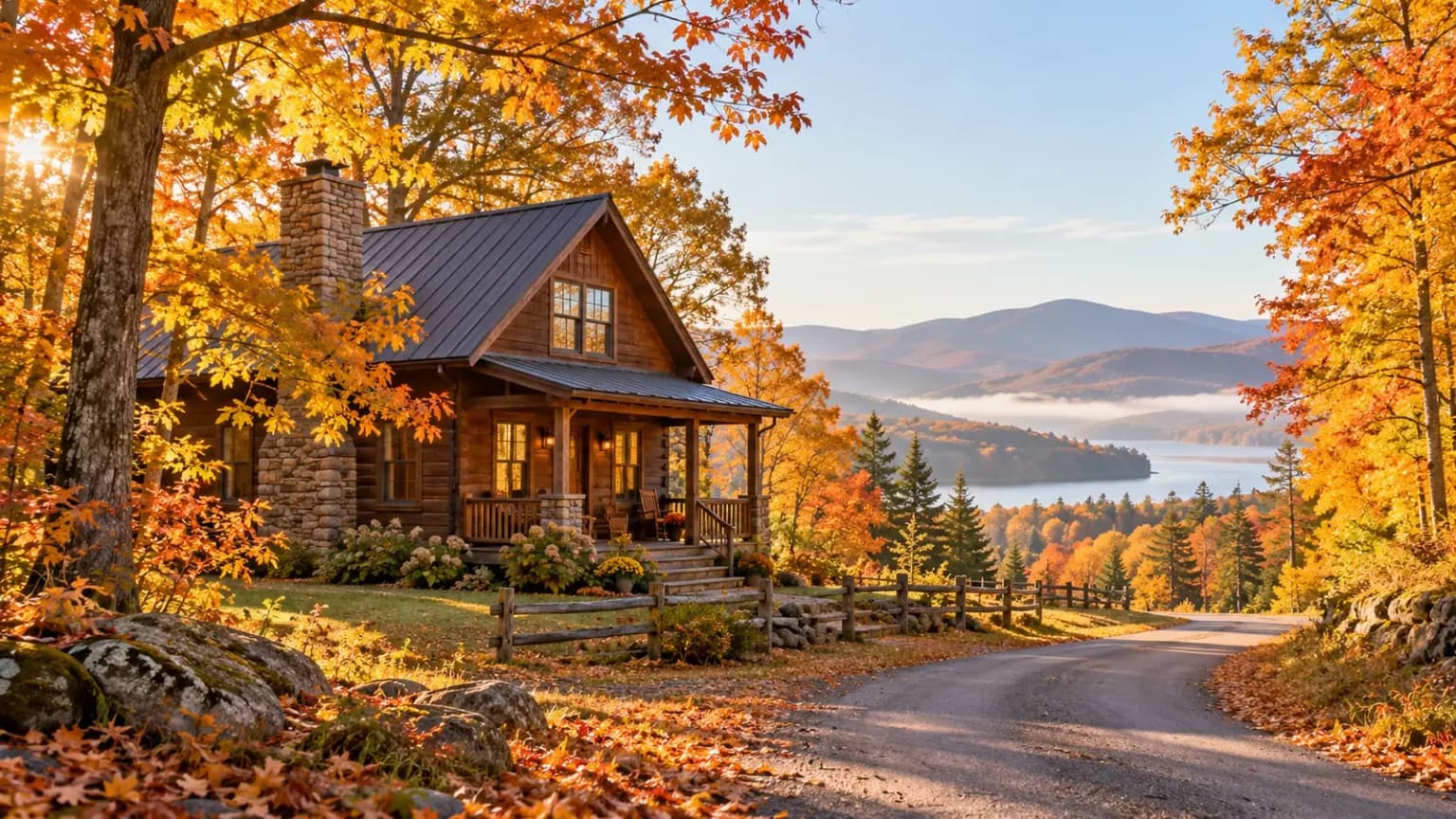
You want a change of scenery, but a full vacation means finding time off, arranging care, and paying for several nights away. Short fall getaways offer a more manageable option: two or three days built around one place and a few things you actually want to do.
The appeal is straightforward. A nearby overnight trip can fit around work, limit total spending, and make room for seasonal pleasures such as colorful trails and orchard visits. The catch is that autumn’s most popular destinations can be crowded and expensive. Planning around travel time, total cost, and local conditions matters more than finding a photogenic cabin.
What the travel data actually show
There is evidence behind the interest in short fall getaways, although travel-company research should be read with its limits in mind.
In an August 2026 report, Airbnb said 60% of respondents planned a weekend getaway that fall. The finding came from a company-commissioned online survey of 2,000 US adults conducted by Focaldata in July 2026. It measures intentions, not completed vacations.
Separately, KAYAK’s 2026 travel report found that the share of hotel searches for stays of one to three nights increased 13% in its year-over-year comparison. That is a change in search share on its platforms, not proof that all Americans are taking more short vacations.
Together, these findings suggest interest in compact breaks. They do not establish that short trips are replacing longer vacations across the entire travel market.
Why a smaller trip can fit the season
Short fall getaways work particularly well when the main attraction is simple: a scenic walk, a food market, or a quiet afternoon in a different town.
For someone with a Monday-through-Friday schedule, leaving Friday evening and returning Sunday may avoid using vacation days. Booking short fall getaways also means fewer accommodation nights to pay for, though an expensive room or flight can erase that advantage.
There is less pressure to justify a major journey with a packed itinerary. One satisfying Saturday can be enough.
That helps explain why short vacations are popular as a practical choice. It does not mean everyone will find them restful. If the trip requires exhausting travel or constant coordination, staying closer to home may deliver more of what you wanted.
How to plan a fall getaway around your actual time
Start with the journey, not the destination photo
For short fall getaways, set a maximum door-to-door travel time before searching for accommodation.
As a planning guideline, consider somewhere roughly two to three hours away for a two-night stay. This is a suggested starting point, not a rule: traffic, children’s needs, mobility requirements, and your tolerance for driving all matter.
Compare the complete journey. A one-hour flight still involves airport transfers, security, boarding, and transportation after landing. A direct train to a walkable town may leave you with more usable time.
Ask one question before booking: how much of Saturday will actually belong to the trip?
Choose one main reason to go
Give the weekend a clear purpose. Choose foliage, food, a museum, a concert, or time together, then build around it.
The best short fall getaways do not require every activity to succeed. Pick one main outing, one optional stop, and one indoor alternative. Confirm opening hours and reservation requirements directly with the operator.
If you are traveling with others, agree on spending limits and walking expectations before booking. A beautiful trail is a poor centerpiece if someone cannot comfortably use it.
Match the destination to the experience
Searching for the best fall getaways in the US can produce a long list of places that are impractical from your starting point. Narrow the choice by the kind of weekend you want.
For foliage-focused short fall getaways, allow flexibility within the region. The National Park Service explains that color develops across different elevations in the Great Smoky Mountains, making exact peak dates difficult to predict.
Crowds deserve equal attention. Shenandoah warns that fall weekends bring heavy visitation and that September and October weekend lodging and campsites often book months ahead. These are seasonal destinations where “fall” does not necessarily mean “off-season.”
Set a total budget before choosing a room
Affordable fall getaways begin with the total cost, rather than an attractive nightly rate.
For short fall getaways, add accommodation taxes, required fees, transportation, parking, meals, admission, and any pet-care costs. Check the final booking total and cancellation deadline before paying.
A hypothetical two-night budget for two adults
This example assumes a nearby driving trip in a personal car. The figures are planning allowances, not researched rates or a promise of availability.
That is $350 per person if two adults split the cost equally. Car rental, airfare, pet care, and shopping are excluded.
If your ceiling is $500, the $200 gap needs a concrete change: one night instead of two, cheaper lodging, a nearer destination, or fewer paid meals and activities. Do not assume small savings on coffee will solve a large accommodation gap.
Budget-friendly fall travel can also mean choosing a day trip and keeping the overnight-stay money for another occasion.
Build a weekend with breathing room
Short fall getaways benefit from an itinerary that leaves space for delays and changing weather.
Friday: Travel, check in, and eat somewhere convenient. Avoid making the whole evening depend on an arrival-time reservation.
Saturday: Do the main activity in the morning. Leave the afternoon open for lunch, browsing, or an optional stop. Choose dinner close to your accommodation.
Sunday: Have breakfast and take a short walk before heading home with enough time to unpack and prepare for Monday.
For fall road trip ideas, favor a compact loop over several distant attractions. Changing hotels during a two-night break usually adds packing, check-in, and driving time without adding much rest.
Avoid the mistakes that make a quick break harder
Last-minute fall getaways are easier to arrange when you can change the destination. If a particular festival or famous foliage town is essential, secure the necessary lodging and tickets before committing to transport.
Do not assume a disappointing forecast automatically qualifies for a refund. Read each booking’s cancellation terms.
For outdoor short fall getaways, check official alerts, the local forecast, and sunset time shortly before departure. Pack layers, rain protection, suitable footwear, and a charged phone; download maps if reception may be limited.
Finally, avoid making perfect leaves the condition for a successful weekend. Choose somewhere you would still enjoy if the trees were mostly green, the rain arrived, or the busiest viewpoint was inaccessible.
Make the first decision small
Start your short fall getaways planning with three choices: an available weekend, a comfortable total budget, and a realistic travel radius. Find two destinations that fit, then compare their full costs and one activity you would enjoy at each.
Book the option that gives you enough time to settle in. Short fall getaways should have room for the reason you went