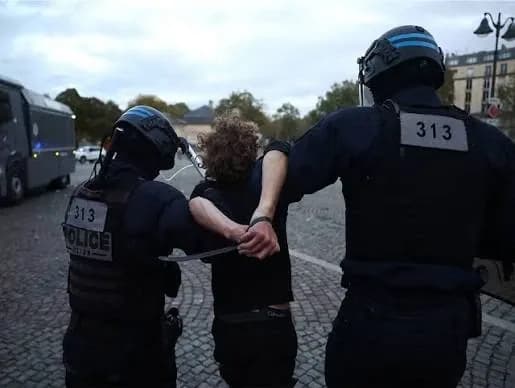
French police had arrested 135 people across the country by 1 p.m. Paris time (7 a.m. ET) on Saturday, as tens of thousands of people joined a second straight weekend of nationwide France protests over the cost of living, school conditions and public services. Interior Minister Laurent Nuñez announced the figure and said officers had also seized a variety of weapons, while noting that no major incident had been reported at that point (France 24).
For US readers, the key points are simple. Turnout at today's France protests looks well below last weekend's, the security operation is far larger, and every number released so far is provisional. Below is what is confirmed, what remains unclear, and what to watch next.
What We Know So Far
- Arrests: 135 nationwide as of 1 p.m. local time, according to Nuñez. Officials have not said how many of those people were placed in custody or will face charges.
- Turnout: Police counted roughly 35,000 demonstrators across 136 actions at that hour, compared with about 60,000 at the same point a week earlier, based on Interior Ministry figures reported by franceinfo.
- Security: The government said about 70,000 officers would be deployed nationwide, supported by specialist units, armored vehicles and water cannons.
- Paris: The police prefecture said it carried out 635 checks before the march and seized numerous prohibited items.
- Lyon: Riot police reportedly used tear gas to break up about 150 people trying to block a road near the city center, where demonstration restrictions were in force (Euronews).
Last Saturday vs. Today
This side-by-side view shows why early figures from the France protests need context.
|
Measure |
Saturday, Oct. 17 |
Saturday, Oct. 24 |
|---|---|---|
|
Turnout around 1 p.m. |
About 60,000 |
About 35,000 |
|
Full-day turnout (Interior Ministry) |
About 550,000, including 110,000 in Paris |
Not yet released |
|
Arrests |
Nearly 400 reported that evening; later official tallies topped 2,000 |
135 as of 1 p.m. |
Last weekend's early-afternoon count also looked modest before the final total passed half a million. Today's midday number is a snapshot, not a verdict.
Why the France Protests Started
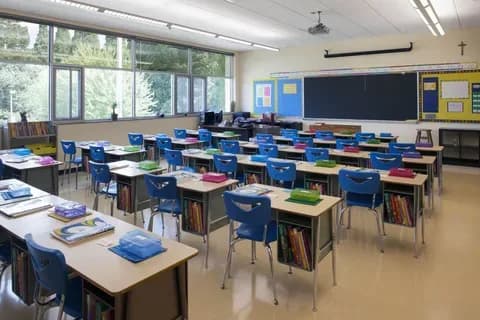
The France protests began in late September with high school students angry about under-resourced schools. Their demands include more teachers, smaller classes, buildings better suited to the climate, changes to the Parcoursup university-admissions platform, and an end to what they describe as police violence against students. Some students also want every school to have at least one nurse, psychologist and career adviser for every 500 pupils.
Unions, university students, teachers, retirees and "yellow vest" activists have since joined, widening the focus to wages, fuel prices and public services. The CGT, one of France's largest labor unions, has backed the marches and is pressing for higher wages and pensions, lower prices and stronger public services.
The government is caught between those demands and pressure from bond markets to cut debt. Prime Minister Sébastien Lecornu promised "concrete, quick and fully funded responses" by late October without giving specifics, and he has pointed to a proposed extra €1 billion for education next year.
How Last Weekend Reshaped Today's Security Plan
On Oct. 17, the Interior Ministry counted about 550,000 demonstrators nationwide. Several marches turned violent: protesters set fire to the town hall in Limoges, and masked groups smashed and looted shops in multiple cities. Nuñez later said more than 2,000 people had been arrested and nearly 1,000 police officers, gendarmes and firefighters had been injured.
Nuñez offered his resignation the next day. President Emmanuel Macron turned it down and asked him to put a new policing strategy in place. Nuñez acknowledged that authorities had lost control in some cities and promised a more mobile, responsive approach.
That shift shaped this round of France protests. In Paris, police on Friday withdrew approval for a march between Bastille and Nation and moved it to a route between Porte d'Italie and Porte de Vincennes, on the city's southeastern edge. Unions and left-wing politicians warned that the change could scatter crowds and fuel disorder, and an administrative court rejected the organizers' appeal. In Lyon, a 21-year-old student told AFP that officers "come and disperse marches before they even form."
The Orléans Factor
A second flashpoint sits south of Paris, separate from the cost-of-living France protests but drawing on the same police resources. The National Rally, Marine Le Pen's hard-right party, is holding its congress in Orléans on Oct. 24 and 25, with Le Pen and party president Jordan Bardella scheduled to speak. A police intelligence assessment reported by Le Monde expected 20,000 to 30,000 opponents of the party to demonstrate there. By midday, police said they had seized items they believed were meant for violence in Orléans, Pau, Rennes, Marseille and Tours.
How to Read Today's Numbers
News alerts about the France protests will keep updating through the evening. Four checks help separate signal from noise:
- An arrest is not a charge. French figures generally count people detained by police. Only some are held in custody, and fewer still are prosecuted. Officials have not yet broken down today's 135.
- Compare like with like. Match a 1 p.m. figure to last week's 1 p.m. figure, not to last week's final total.
- Expect two crowd counts. Last week the Interior Ministry counted 550,000 marchers, while organizers estimated about 800,000. A gap like that is routine in France.
- Smaller does not mean finished. Route changes, local bans and fear after last week's violence can depress turnout without resolving the grievances behind the movement.
What the France Protests Mean for Americans
The State Department still rates France at Level 2, "exercise increased caution," citing terrorism and the risk of civil unrest; check travel.state.gov for the current advisory before you go. The US Embassy in Paris has issued alerts during the unrest, including one after Oct. 17 noting temporary curfews in parts of several cities.
If you are in France or heading there soon, the embassy's advice comes down to a short checklist:
- Stay away from march routes and large gatherings, even ones that look calm.
- Check local news and the RATP transit service before heading out, and plan an alternate route.
- Allow extra time to reach airports and confirm your flight status.
- Carry ID; police have been running checks at Paris transport stations.
- Enroll in the State Department's Smart Traveler Enrollment Program (STEP) to receive embassy alerts by email or text.
If your trip also routes through Germany, see our guide to the Lufthansa Frankfurt fuel shortage.
What Happens Next
- Tonight: Final turnout and arrest totals are expected after the marches end.
- Oct. 31: The yellow vests have called another nationwide day of action.
- Late October to November: Lecornu's promised response is due, and the government plans to unveil its education budget in November.
- The bigger picture: The unrest comes as Macron's term winds down ahead of the 2027 presidential election.
The Bottom Line
Today's France protests are smaller and far more tightly policed than last weekend's, and the 135 arrests announced at midday are an early count rather than a final tally. The grievances driving the movement, from school funding to living costs, remain unresolved, and organizers have already set their next date. The most useful next data point is the Interior Ministry's full-day count tonight. We will update this story when it is released.