With the 2026 midterm elections just 11 days away, the clearest signal of where each party feels nervous isn’t a poll. It’s a travel schedule.
President Donald Trump is spending a Monday night in a state he won by double digits. Former President Barack Obama is headed to Detroit. Vice President JD Vance has been defending a fellow Republican’s attack ad in Ohio. Where national figures go in the final stretch tells you which races both parties think are still in play.
Here is what is confirmed, what is still being reported, and how to read it.
The Short Answer
Republicans are spending time defending ground they would normally take for granted, while Democrats are trying to protect their own seats in Michigan and Georgia and expand into Ohio and the Deep South. The GOP holds a 53-47 Senate majority, so Democrats need a net gain of four seats to take control. That math is why a race in Mississippi is suddenly getting presidential attention.
Mississippi: Defending a Seat That Usually Defends Itself
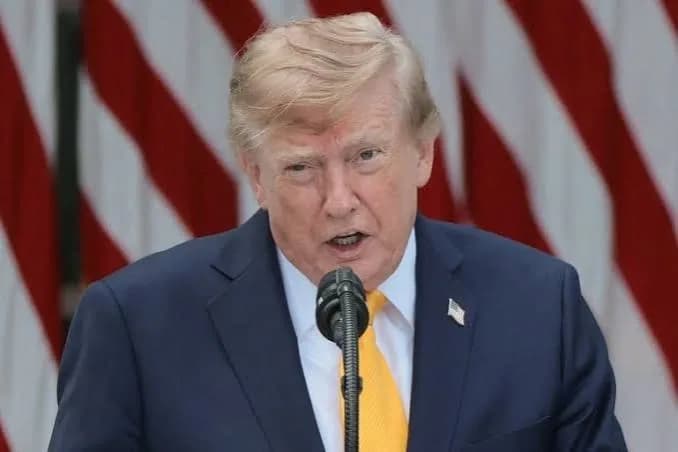
According to multiple sources familiar with the plans, Trump will campaign for Sen. Cindy Hyde-Smith on Monday night at the Crossroads Arena in Corinth, eight days before the Nov. 3 election. Neither Hyde-Smith nor her campaign had confirmed the visit when it was first reported.
On paper, this should be a safe race. A Democrat hasn’t won a U.S. Senate race in Mississippi since 1982, Trump carried the state by about 23 points in 2024, and most national forecasters rate the race solid or likely Republican.
So why the visit? Trump has been traveling to normally safe Republican states to boost GOP turnout as his approval ratings have fallen and pundits say races in deep-red states are becoming more competitive.
Democrats are treating the race as a real opportunity. Senate Majority PAC announced a $1.2 million ad buy for Democratic nominee Scott Colom, a north Mississippi district attorney. Kamala Harris is campaigning with him in Columbus, Pete Buttigieg is slated for the Gulf Coast, Sen. Raphael Warnock held a rally in Jackson, and Obama has endorsed him. Independent candidate Ty Pinkins is also on the ballot.
Republicans see it differently. Hyde-Smith said she is tuning out pollsters who describe the race as tightening, and Sen. Roger Wicker said he believes she is still leading. Hyde-Smith also argued that visits from national Democrats show how Republican the state remains. mississippitoday
Michigan: Democrats Defend an Open Seat
Michigan is the opposite situation: a seat Democrats hold and must keep. Democrat Abdul El-Sayed, who won the nomination by defeating Rep. Haley Stevens in the August primary, faces Republican former Rep. Mike Rogers for the seat of retiring Sen. Gary Peters.
Obama is scheduled to appear with El-Sayed and gubernatorial nominee Jocelyn Benson at a get-out-the-vote rally in Detroit on Saturday, Oct. 24, the first day of in-person early voting. NewsNation reported that Trump may visit Michigan on Oct. 25, the day after Obama’s rally, though that trip had not been officially confirmed at the time of writing.
The polling is close and depends on who you ask:
- An InsiderAdvantage survey of 1,200 likely voters taken Oct. 9–10 found El-Sayed ahead 48% to 46%.
- A Tyson Group poll for the conservative Alliance for a Better Future, conducted Oct. 5–8, had Rogers leading 46% to 44%.
- Rogers ended the latest reporting period with more money in the bank, about $6.5 million compared with El-Sayed’s $3.8 million.
Both leads are within the typical margin of error, which is why both parties are sending their biggest names.
Ohio: A Senate Fight and a Governor’s Race Controversy
Ohio has two closely watched contests. In the Senate race, Republican Sen. Jon Husted faces former Democratic Sen. Sherrod Brown. One poll cited by Newsweek earlier this month showed Brown leading Husted 47.7% to 44%.
The governor’s race has drawn more headlines. Republican Vivek Ramaswamy is running an ad featuring the estranged mother of his Democratic opponent, Dr. Amy Acton, and his campaign plans to spend $4 million airing it in the closing weeks. Acton’s campaign responded with its own ad featuring her younger brother, who criticized Ramaswamy for using the abuse they experienced as children for political points.
The ad has split Republicans. Husted distanced himself from it, saying he would not have run it. Vance, campaigning in his home state, told critics in his party to “stop whining about an advertisement and go win the race”. Ramaswamy has said he would prefer the race focus on issues and has justified the ad by pointing to Acton’s refusal to debate him.
Georgia: Ossoff Ahead, Governor’s Race Tight
Georgia is another seat Democrats are defending. Newsweek reported Sen. Jon Ossoff holding a lead of about 9 points over Republican Rep. Mike Collins.
The governor’s race to replace term-limited Gov. Brian Kemp looks closer. Republican Rick Jackson, in a tight contest with Democrat Keisha Lance Bottoms, has increasingly modeled his campaign on Kemp as he courts independent voters. ajc
Trump has already been to the state once this month. At an Oct. 16 rally in northwest Georgia, he urged conservative voters to treat the midterms as if his own name were on the ballot. U.S. News reports Trump will hold another rally in Georgia this weekend to support Jackson, who plans to campaign in Atlanta instead of attending, and that Harris will campaign with Ossoff next week. atlantanewsfirstU.S. News & World Report
The Case Each Side Is Making
Republicans’ argument: Trump’s visits energize base voters who are less likely to turn out when he isn’t on the ballot. Party leaders also point to fundraising advantages in some races and argue that Democrats like El-Sayed are out of step with their states.
Democrats’ argument: Rising prices and the president’s approval ratings have put Republican seats at risk even in red states. They are welcoming Trump’s visits in places like Georgia, betting he will motivate their own voters as much as his.
Neither argument is settled. Polls in most of these races sit within the margin of error, and late shifts are common in midterms.
How to Read Campaign Travel: A Quick Guide
Visits aren’t random. Here is a simple way to interpret them:
| State | Key race | Who’s visiting | What it likely signals |
|---|---|---|---|
| Mississippi | Senate: Hyde-Smith (R) vs. Colom (D) | Trump (R); Harris, Buttigieg, Warnock (D) | GOP shoring up turnout in a usually safe state |
| Michigan | Senate: Rogers (R) vs. El-Sayed (D) | Obama (D); Trump reported (R) | True toss-up; both sides competing for turnout |
| Ohio | Senate: Husted (R) vs. Brown (D); Governor: Ramaswamy (R) vs. Acton (D) | Vance (R) | GOP defending a state it has won recently |
| Georgia | Senate: Ossoff (D) vs. Collins (R); Governor: Jackson (R) vs. Bottoms (D) | Trump (R); Harris (D) | Democrats defending, GOP targeting the governor’s race |
A few rules of thumb:
- A president visiting a safe state usually means the party sees a turnout problem, not necessarily a likely loss.
- A visit to a toss-up state means the race may decide Senate control.
- Candidates skipping their own party’s rally (as reported in Georgia) often signals they are courting independents.
- Big outside ad buys in the last two weeks show where party committees think money can still move votes.
What to Watch Before Nov. 3
- Whether Trump’s reported Michigan trip happens, and how both campaigns respond.
- Early-voting turnout in Michigan and Georgia, which began this month.
- New polling in Mississippi after the Corinth rally and the Senate Majority PAC ad buy.
- Whether the Ohio ad controversy shows up in polling for the governor’s or Senate race.
For more on the issues shaping voters’ decisions, see our coverage in the News section, including our explainer on what the U.S. budget deficit means for households.
The takeaway: In the final days of the 2026 midterm elections, watch the schedules, not just the polls. Where both parties send their biggest names will tell you which races they believe will decide control of Congress.