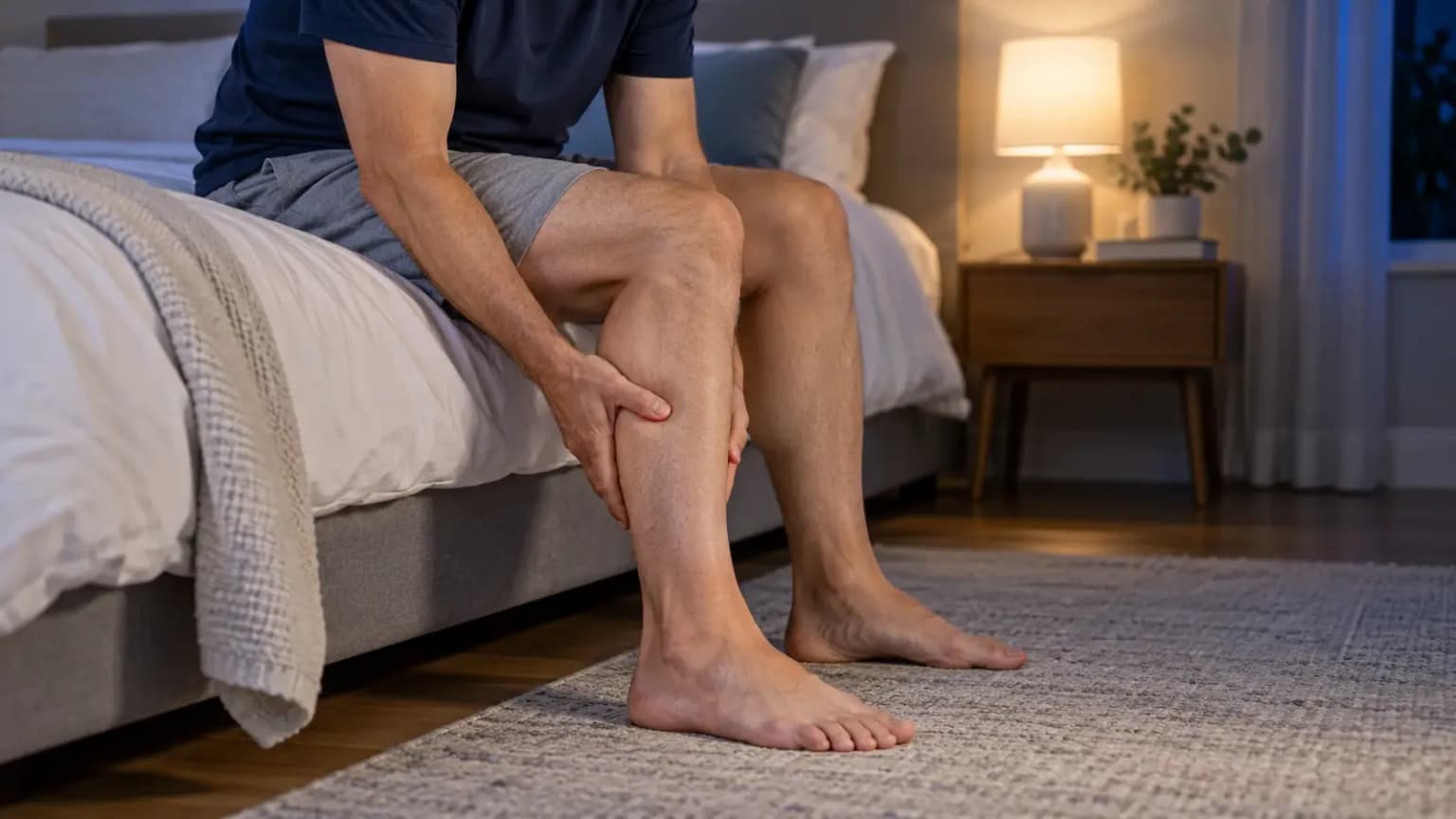
A sudden knot in your calf can turn a quiet night into a painful wake-up call. For typical night-time calf cramps, a useful first step is to straighten your knee and gently draw your toes toward your shin. Massage and careful movement may also help the muscle relax.
Prevention takes more patience. Regular stretching is reasonable to try, but supplements are not an automatic solution. And calf pain with new swelling or skin discoloration needs medical attention rather than another home remedy.
What does a nighttime cramp feel like?
A cramp is an involuntary muscle contraction: the muscle tightens without you choosing to move it. You may feel a firm knot, sudden pain, and difficulty moving the leg.
According to NHS guidance, episodes can last from a few seconds to 10 minutes, with soreness sometimes lingering for up to 24 hours. The calf is a common location, although feet and thighs can also cramp.
Night-time calf cramps differ from restless legs syndrome. Restless legs usually involves an urge to move, often with uncomfortable sensations during rest, rather than a brief, tightly contracted muscle. Describing that distinction helps a clinician understand what is interrupting your sleep.
What causes calf cramps at night?
Often, there is no single identifiable cause. Mayo Clinic notes that muscle fatigue and nerve issues may contribute, while older adults and pregnant people are more likely to experience nighttime cramps.
Night-time calf cramps can also occur alongside dehydration, certain medications, or conditions affecting nerves or circulation. However, having a cramp does not establish that you have a deficiency, diabetes, or a circulation problem.
The useful question is what else has changed. Did symptoms begin after a medication adjustment? Do they follow unusually strenuous activity? Is there numbness, weakness, or pain during walking?
If night-time calf cramps started after a new prescription, contact your clinician or pharmacist. Do not stop the medicine yourself; the timing is a clue to review, not proof that the drug caused the problem.
What to do when a calf cramp wakes you up
For familiar night-time calf cramps without unusual swelling or other warning signs, try this sequence:
- Lengthen the calf. Straighten the affected leg and gently pull your toes toward your shin. Hold a comfortable stretch rather than bouncing or forcing the movement.
- Massage gently. Rub the tightened muscle while allowing it to relax.
- Move carefully. If you can stand safely, put weight through the affected leg or take a few slow steps. Turn on a light first and use support if needed.
- Try warmth for lingering tightness. A warm towel or shower may ease discomfort. Avoid excessive heat and do not fall asleep on a heating pad.
These approaches are consistent with Mayo Clinic's self-care advice. You do not need to perform every step if the first one helps.
Pain relievers are not a quick rescue for night-time calf cramps. NHS guidance notes that they take too long to work during the episode, although an appropriate pain reliever may help soreness afterward. Ask a pharmacist if you are unsure what is safe with your medicines or health conditions.
Can bedtime stretching prevent another episode?
Regular stretching may help some people, but it cannot guarantee uninterrupted sleep.
A Cochrane review found limited evidence that combined calf and hamstring stretching may reduce the severity of nighttime cramps in older adults. Whether it reliably reduces the number of episodes remains uncertain. This distinction matters: relief during a cramp and prevention of future cramps are different outcomes.
For night-time calf cramps, a gentle wall stretch is a practical place to start:
- Stand facing a wall with your hands against it and your feet flat.
- Lean forward until you feel a comfortable stretch in your calves.
- Hold briefly, return upright, and repeat gently.
The NHS suggests regular practice, including a session before bed. Stop if stretching causes sharp pain. If balance or mobility is a concern, ask a physical therapist to show you a suitable alternative.
Other reasonable habits include drinking fluids through the day and loosening tightly tucked bedding around your feet. Follow any prescribed fluid restriction rather than increasing water indiscriminately. Treat these changes as a trial, not a promised cure for night-time calf cramps.
Are magnesium supplements worth trying?
Magnesium is widely promoted for cramps, but the evidence does not support assuming that everyone needs it.
A 2020 Cochrane review found that magnesium was unlikely to provide a meaningful preventive benefit for typical muscle cramps in older adults. Evidence in pregnancy was inconsistent and uncertain.
That finding does not mean a diagnosed deficiency should go untreated. It means night-time calf cramps alone are not a good reason to assume you need a supplement. A clinician can assess whether your history suggests a deficiency or another explanation.
Before buying a product, ask what problem it is supposed to treat and what evidence supports that use. If pregnant, discuss supplements with your maternity clinician.
Why quinine is not a routine solution
US readers should not use quinine to treat or prevent night-time calf cramps. MedlinePlus warns of potentially serious effects, including bleeding problems, kidney damage, abnormal heart rhythms, and severe allergic reactions.
UK practice differs: NHS guidance says a GP may sometimes consider quinine when exercises have not helped, after discussing risks. That is an individualized prescribing decision, not a recommendation to self-medicate.
If simple measures fail, the next step is a clinical review rather than trying increasingly strong remedies on your own.
When to seek medical help
Arrange an appointment if night-time calf cramps repeatedly disturb sleep, last longer than 10 minutes, or occur with numbness or muscle weakness. Persistent sleep loss is enough reason to ask for help; you do not need to wait until symptoms become unbearable.
Seek urgent care for severe cramping that does not settle.
New pain with swelling in one leg, skin discoloration, or swollen veins needs prompt assessment because it can indicate a deep vein thrombosis, a blood clot in a deep vein. Do not assume those symptoms are an ordinary cramp.
If leg pain and swelling occur with chest pain or shortness of breath, call emergency services immediately: 911 in the US or 999 in the UK.
Keep a short record before your appointment
A simple log can make the conversation about night-time calf cramps more useful. Record:
- Which leg cramped and approximately how long it lasted.
- Whether there was a hard muscle knot, an urge to move, or persistent pain.
- Any recent medication changes or unusually demanding activity.
- What helped and how much sleep you lost.
- Any swelling, numbness, or weakness.
Hypothetical example: “left calf, about two minutes, eased when I pulled my toes upward, woke me three nights this week” gives your clinician more detail than “my legs hurt.”
Tonight, start with a gentle stretch and keep the route beside your bed clear. If cramps keep returning, bring your symptom log and medication list to an appointment instead of repeatedly guessing at the cause.