If you feel anxious and rely on packaged meals, headlines about ultra-processed foods and anxiety can make your grocery cart seem like the problem. Research does suggest a connection, but it cannot tell you that a particular snack caused your symptoms—or that changing your diet will cure them.
The useful question is what the evidence supports doing next. Understanding the gut-brain connection can help you make manageable food choices while keeping sleep, stress, and professional mental health care in view.
What research shows about ultra-processed foods and anxiety
A 2022 study in Public Health Nutrition examined 10,359 US adults using national survey data collected between 2007 and 2012. People consuming the largest share of calories from ultra-processed foods reported more anxious days and more mentally unhealthy days than those consuming the smallest share.
This was a cross-sectional study: researchers examined diet and symptoms within a survey rather than assigning diets and following changes. Anxiety was assessed through reported anxious days, not a clinical diagnosis.
That distinction limits what findings about ultra-processed foods and anxiety can establish. Anxiety might affect shopping, appetite, or cooking. Financial pressure and other circumstances might influence both eating patterns and mental health. Statistical adjustments cannot eliminate every alternative explanation.
The study identifies a reason for further investigation. It does not prove these foods are driving a national anxiety epidemic.
Why the American diet makes this question important
Ultra-processed foods are a substantial part of everyday eating. A CDC report published in August 2025 found that they supplied 53% of calories consumed by US adults during August 2021–August 2023.
However, the adult share had declined from 55.8% in 2013–2014. Those figures do not support a simple story in which steadily increasing consumption explains rising anxiety.
Research on ultra-processed foods and anxiety therefore needs to examine more than whether both are common. The type of food, overall diet, personal circumstances, and direction of the relationship all matter.
What counts as ultra-processed?
The commonly used NOVA system identifies ultra-processed foods as industrial formulations often containing ingredients or additives used for flavor, texture, or appearance. Examples include many soft drinks, packaged snack cakes, and instant noodle products.
Processing alone is not the problem. Freezing vegetables, canning beans, and pasteurizing milk do not automatically make foods ultra-processed. Product formulations matter.
Nor does the category tell you everything about nutrition. A packaged whole-grain bread and a sugary drink can both qualify, despite providing different nutrients.
For readers concerned about ultra-processed foods and anxiety, a practical starting point is to compare fiber, added sugar, and how a product fits into meals. A complicated ingredient name is not, by itself, evidence that something causes anxiety.
How the gut and brain communicate
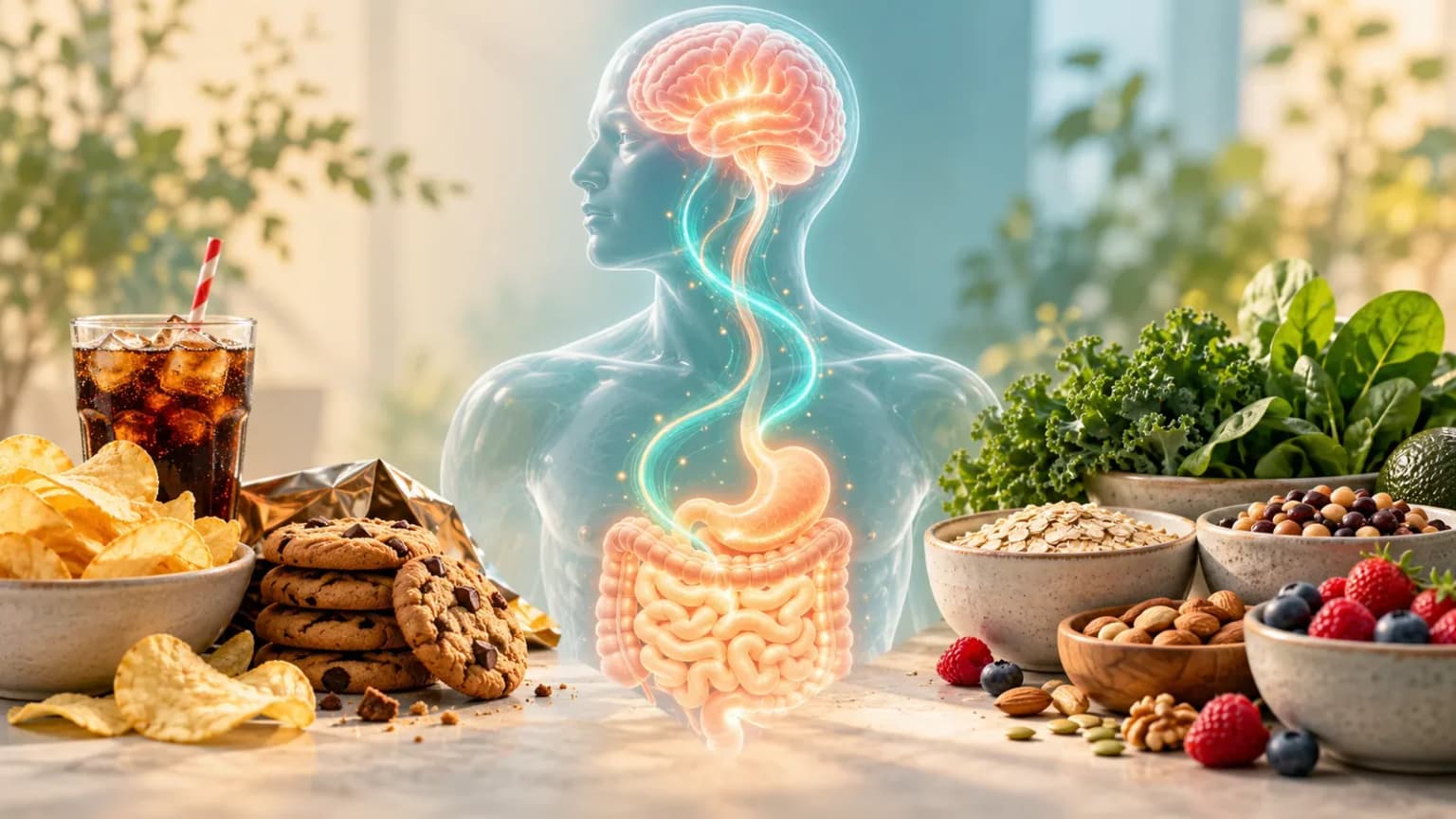
The gut-brain axis is the communication system linking your digestive tract and brain. As NIDDK explains, nerves and hormones carry signals between them. This helps coordinate digestion, appetite, and other functions.
The gut microbiome—the community of microorganisms living in your digestive tract—adds another layer. Microbes can break down certain fibers and produce compounds called short-chain fatty acids. Researchers are studying how these compounds interact with immune activity and signaling to the brain.
This provides a plausible biological framework for studying ultra-processed foods and anxiety. It is not proof of the full sequence from a packaged food to altered microbes to an anxiety disorder.
Fiber and the foods that get displaced
Some eating patterns dominated by snack foods and sweetened drinks leave less room for beans, vegetables, fruit, and whole grains. That matters because these foods provide fiber and other nutrients.
Research on gut microbiome and mental health explores whether changes in microbial activity help explain diet-related differences in mood. But adding fiber has not been established as a standalone anxiety treatment.
When considering ultra-processed foods and anxiety, ask what a frequent convenience food replaces. A snack eaten alongside balanced meals presents a different nutritional picture from snacks routinely replacing lunch.
Additives: promising research, limited conclusions
A small controlled feeding study published in Gastroenterology tested the emulsifier carboxymethylcellulose, or CMC, in 16 healthy adults. Over 11 days, the CMC group experienced changes in gut microbes and microbial products. The tested dose was likely higher than most individuals’ usual CMC intake.
A later randomized trial involving 60 healthy participants, published online in 2025, also investigated emulsifiers. Some microbial products changed, but measured inflammatory markers did not differ between the emulsifier and placebo groups at the intervention’s end.
These studies help explain interest in food additives and gut microbiome research. They did not establish that emulsifiers cause anxiety. Applying them directly to ultra-processed foods and anxiety would go beyond their findings.
Make changes without turning eating into another worry
You do not need an expensive diet overhaul or a perfect ingredient list. Use these three questions to choose a manageable first change.
1. Are drinks adding a lot of caffeine?
If you regularly drink energy drinks, review their caffeine content and your total daily intake. NIMH notes that reducing caffeine and getting enough sleep can help anxiety symptoms alongside standard treatment.
Caffeine deserves separate attention in discussions of ultra-processed foods and anxiety.
An improvement after cutting energy drinks would not prove that ultra-processing caused your anxiety. Caffeine could be an important explanation.
2. Can you add a reliable meal?
Hypothetical example: someone working long shifts often replaces lunch with chips and an energy drink. An achievable alternative might be microwave rice, rinsed canned beans, frozen vegetables, and water.
For broader context, see our guide to ultra-processed foods and your health.
That meal still uses convenient packaged ingredients. It adds a more substantial meal and sources of fiber without requiring cooking from scratch.
This is a useful way to respond to concerns about ultra-processed foods and anxiety: improve the routine you can sustain instead of trying to eliminate every packaged product.
3. Which fiber-rich food fits your budget?
Foods that support gut health can be ordinary staples: oats, lentils, beans, whole grains, fruit, vegetables, and nuts. Choose options you enjoy and tolerate.
Add fiber gradually and drink enough fluids. NIDDK recommends increasing fiber a little at a time so your body can adjust. If you have a digestive condition or prescribed dietary restrictions, discuss changes with your clinician or dietitian.
What to avoid when interpreting the evidence
Claims about ultra-processed foods and anxiety become misleading when they promise more certainty than studies provide. Be cautious about advice to:
- Eliminate entire food groups based on one difficult day.
- Buy a probiotic marketed as a guaranteed anxiety solution.
- Treat a change in gut bacteria as proof of improved mental health.
- Stop prescribed treatment because you have changed your diet.
NCCIH emphasizes that probiotic effects vary by product and person, and that unproven products should not replace established treatments.
A brief record of meals, caffeine, sleep, and symptoms may help you discuss patterns with a clinician. It cannot diagnose the cause of anxiety. Stop tracking if it makes eating more stressful.
When food changes are not enough
If anxiety persists, interferes with work or relationships, or causes you to avoid everyday activities, contact a health professional. Psychotherapy and medication are established treatment options; lifestyle changes can support care.
The next step after reading about ultra-processed foods and anxiety can be modest: plan one dependable meal or review one caffeinated drink. You can improve your eating habits while getting help for anxiety, without making recovery depend on a flawless diet.
This article provides general health information, not an individual diagnosis or treatment plan.